
Spring System and Size
The inspection identifies whether the door uses torsion or extension springs and records the measurements needed to select a properly matched replacement.
Serving Quincy, Florida
Restore balanced movement with a careful spring inspection, correctly matched replacement parts, and a complete operating check.
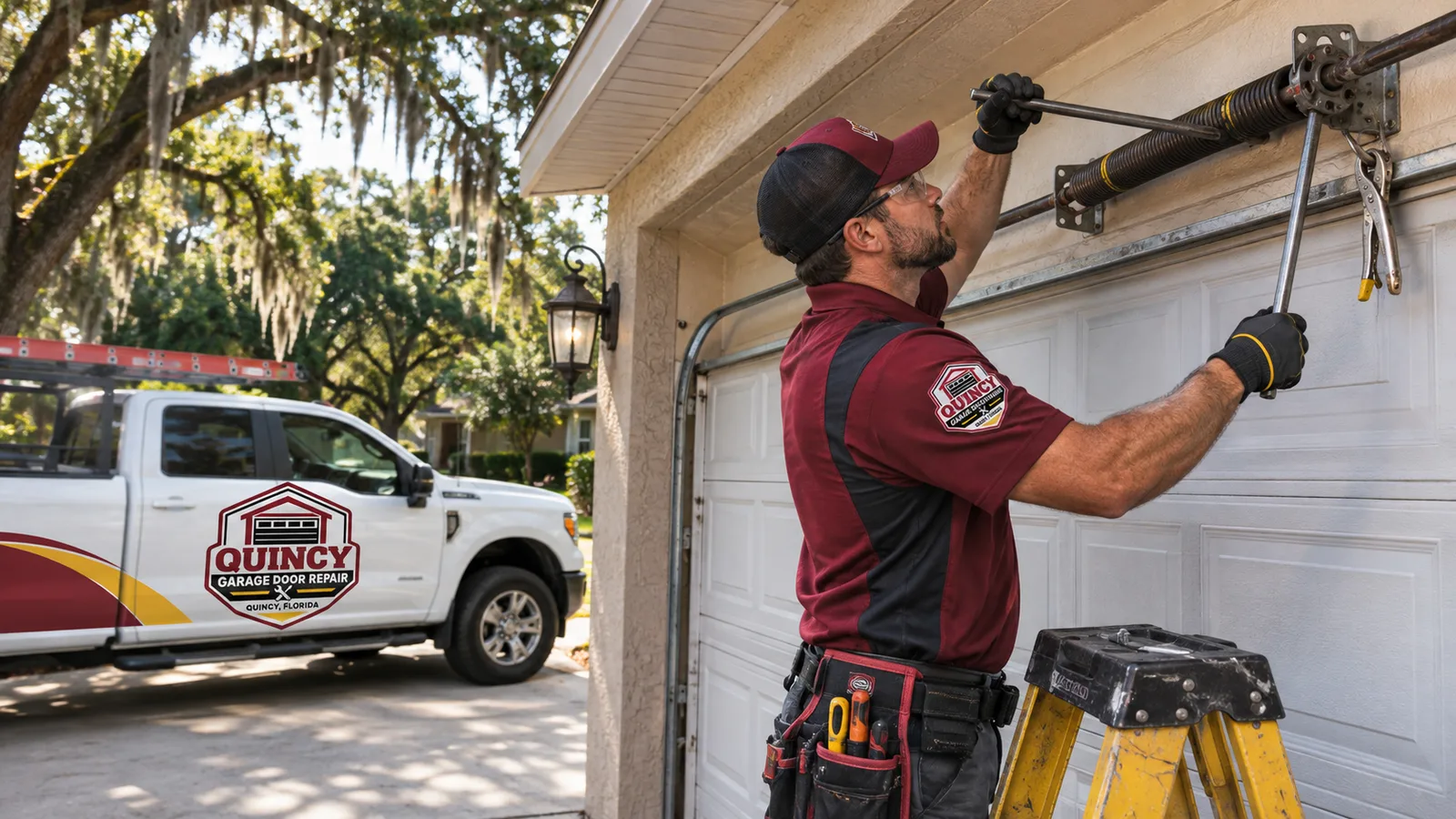
A broken spring can leave a garage door too heavy to lift, stuck partway, or moving unevenly. Quincy Garage Door Repair provides garage door spring repair for Quincy, FL property owners when a spring breaks, loses tension, or shows visible damage. The work starts with identifying the spring system and checking the door rather than assuming one replacement fits every setup.
Garage door springs store substantial mechanical energy. Torsion springs are wound around a shaft above the opening, while extension springs stretch along the horizontal tracks. Both systems counterbalance the door's weight. Attempting to unwind, cut, stretch, or replace a spring without the proper tools and procedure can cause the spring, cable, winding bar, or door to move suddenly.
For spring repairs, Quincy's local garage door service focuses on restoring controlled movement and verifying how the spring system works with the cables, drums, tracks, and opener. Stop operating the door if a spring is broken or a cable has come off its drum. Repeated opener use can strain the motor and may pull the door out of alignment.
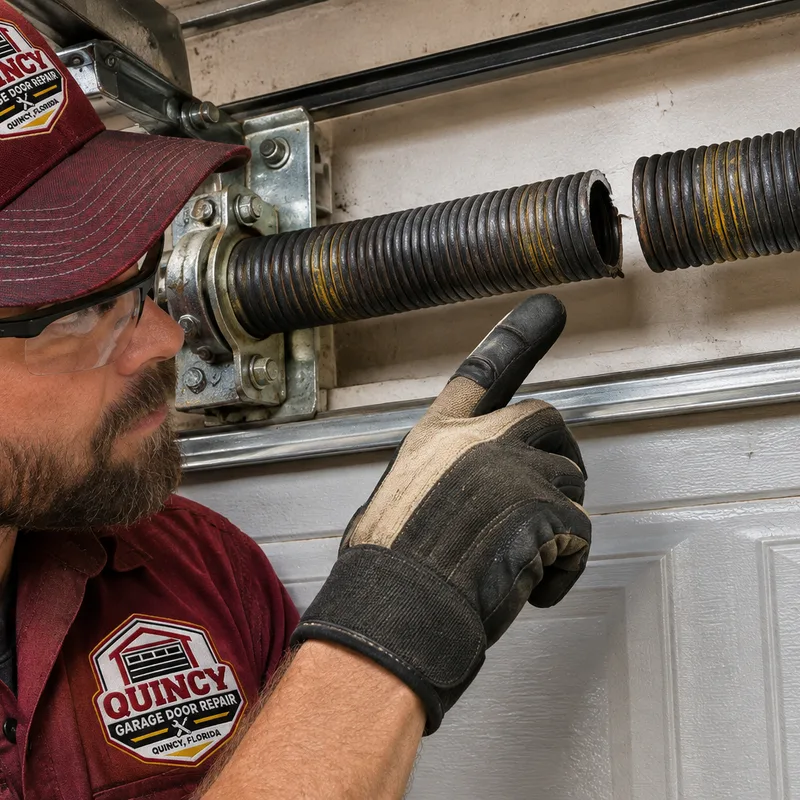
A loud bang from the garage is a common sign of a torsion spring breaking. You may also see a visible gap in the coil above the door. With an extension system, the damaged spring may hang loose or appear stretched along one side of the track.
Other warning signs include a door that feels unusually heavy, rises only a short distance, closes hard, or sits crooked in the opening. Jerky travel and loose lifting cables can also point to a counterbalance problem. An opener may hum or strain because it is trying to move weight that the springs should carry.
Do not stand or walk under a door that is hanging unevenly. Keep people, pets, and vehicles clear, leave the door where it is, and arrange an inspection. If the door is open when a spring fails, avoid pulling the emergency release because the door may drop once it is disconnected from the opener.
The inspection identifies whether the door uses torsion or extension springs and records the measurements needed to select a properly matched replacement.
Lift cables are checked for fraying, kinks, and correct seating. Drums, end bearings, center support hardware, and the torsion shaft are examined for damage or binding.
After spring work, the door is tested manually with the opener disconnected. A balanced door should move with controlled effort and remain near a partially open position rather than dropping or rising sharply.
Bent track, worn rollers, loose fasteners, or an obstruction can imitate a spring problem or keep a repaired door from traveling correctly.
The opener is reconnected only after manual balance and movement are checked. Travel limits and safety reversal behavior are then observed during an operating test.
For an extension system, containment cables are checked because they help restrain a spring if it breaks.
Spring selection depends on the actual door, not just the width of the opening. Door weight, height, track configuration, spring inside diameter, wire size, and coil length can affect the required spring specification. Installing an unmatched spring can leave the door too heavy, make it rise on its own, shorten component life, or cause uneven cable tension.
A spring can wear out without obvious rust or deformation. Metal fatigue develops through repeated operating cycles, and heat, humidity, and moisture can contribute to surface corrosion. In North Florida's humid climate, periodic visual checks for rust, coil separation, frayed cables, and loose hardware can reveal trouble before the door becomes difficult to operate.
If one spring fails on a two-spring torsion system, the second spring should be assessed for comparable wear and verified against the door's required balance. Whether both should be replaced depends on their condition, age relationship, dimensions, and compatibility. Quincy Garage Door Repair can explain the findings and define the repair scope before work proceeds.
The door is placed in the safest available position and restrained to prevent unexpected movement. The opener remains disconnected while the counterbalance system is being handled.
The spring arrangement, cables, drums, shaft, bearings, brackets, tracks, and door condition are checked. Measurements and door weight information guide spring selection.
Remaining tension is controlled with the appropriate procedure and tools. Damaged parts are removed without releasing stored energy unpredictably.
The matched spring is installed, torsion hardware is secured, and the spring is wound to the setting appropriate for the door. Extension systems receive the correct paired tension and safety-cable checks.
The door is moved manually through its travel to check lift effort, cable tracking, and balance. The opener is then reconnected and tested only after the door moves correctly by hand.
A broken spring can shift more load onto the opener, cables, and remaining spring. Arrange an inspection before attempting to run or lift the door again.
CALL NOW: (850) 498-4024It is safer to leave the door closed and stop using the opener until the spring system is inspected. A residential garage door can be very heavy without spring assistance, and lifting it may allow the door to fall or the cables to lose tension. If a vehicle is trapped, tell Quincy Garage Door Repair about the door's position when arranging service.
The work depends on the spring system and related damage. A cable that has left its drum, a bent track, worn bearings or an uncommon spring size may require additional work. The inspection establishes the scope before repair begins.
Replacing both may be appropriate when a two-spring system has a matched pair with similar use and wear. The remaining spring's dimensions, condition, and compatibility with the door must be checked rather than relying on a blanket rule. Correct balance matters more than simply changing the visibly broken part.
A spring with a fractured coil is replaced rather than spliced or welded. The replacement must match the door's weight and counterbalance requirements. Quincy Garage Door Repair also checks the supporting hardware so a damaged cable, drum, or bearing is not overlooked.
A broken or weak spring may leave the opener trying to lift more weight than it was designed to handle. Stop operating it if the door rises only a few inches, moves crooked, or makes straining sounds. Those symptoms can also involve a loose cable or obstruction, so the complete lifting system should be inspected.
Humidity and moisture can promote surface corrosion on unprotected metal components, while normal opening cycles continue to fatigue the spring steel. Homeowners should watch for rust, a separating coil, noisy movement, or changes in door balance. Lubrication must be appropriate for garage door components and does not restore a worn or broken spring.
Call Quincy Garage Door Repair for a focused spring and cable inspection.