Emergency Garage Door Repair · Quincy, Florida

Emergency Garage Door Repair Quincy FL

Get help with a door that is stuck, crooked, off its tracks or no longer responding. A careful diagnosis identifies the failed part and the safest way to restore access.

✓Failed-part diagnosis
✓Door-position safety check
✓Travel and safety testing
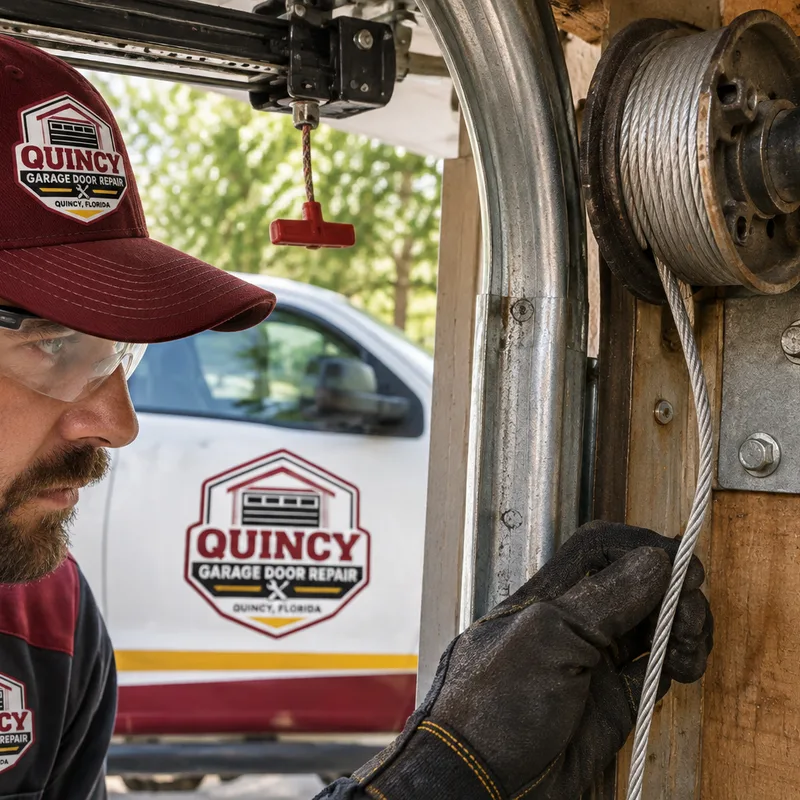
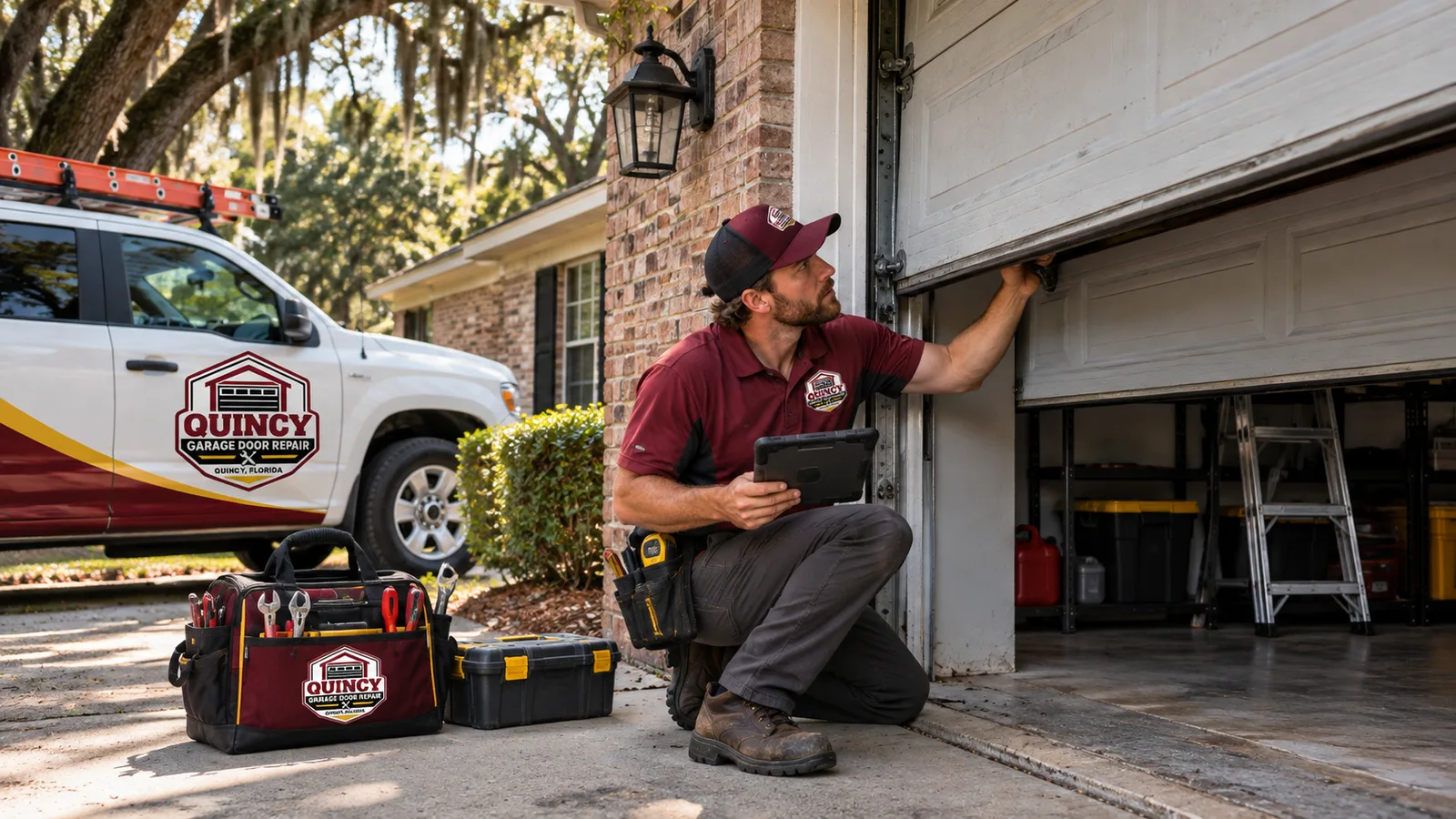
Technician diagnosing a residential garage door stuck partway open with tools outside the door travel path

Urgent Help for a Garage Door That Will Not Move Safely

When a garage door traps a vehicle, leaves the garage unsecured or hangs unevenly, waiting can make the damage worse. Emergency garage door repair Quincy FL service starts by treating the door as a heavy moving system rather than forcing it through another cycle. Quincy Garage Door Repair checks the springs, cables, tracks, rollers, hinges and opener to identify the fault before repair work begins.

Quincy Garage Door Repair is a professional garage door company in Quincy focused on restoring safe operation and practical access. The first priority is controlling the door's weight and preventing loose components from moving unexpectedly. After inspection, the technician can explain what failed, which parts need attention and whether the door should remain out of service until the repair is complete.

Do not pull the emergency-release cord while a door is open, crooked or supported by damaged hardware. The opener may be the only component preventing an unstable door from dropping. Keep people, pets and vehicles away from the opening, and stop using wall controls or remotes until the system has been checked.
Urgent Repair Problems

Problems That May Require Emergency Garage Door Repair in Quincy, FL

Broken Torsion or Extension Spring

A loud snap, a visible spring gap or a door that suddenly feels extremely heavy can indicate spring failure. Garage door springs are under high tension and should not be loosened, wound or replaced without the proper tools and procedures.

Door Stuck Open or Closed

A failed spring, jammed roller, obstructed track or opener fault can stop travel. The source must be identified before the door is lifted or lowered because forcing it may bend panels or pull cables loose.

Cable off the Drum

A loose cable often leaves one side lower than the other. Running the opener in this condition can wrap the cable incorrectly, damage the drum and cause the door to bind in its tracks.

Bent or Separated Track

An impact or loose mounting hardware can move the track out of alignment. A roller outside the track is a warning to stop operation rather than pushing the door back into place.

Opener Runs but the Door Does Not Move

The fault may involve the trolley, drive system, spring balance or door connection. The opener should not be adjusted until the door and counterbalance system have been inspected.

Door Reverses or Will Not Close

Photo-eye alignment, an obstruction, travel settings or mechanical resistance may cause reversal. Safety sensors should be tested after the underlying problem is corrected.

What to Do While the Garage Door Is Stuck

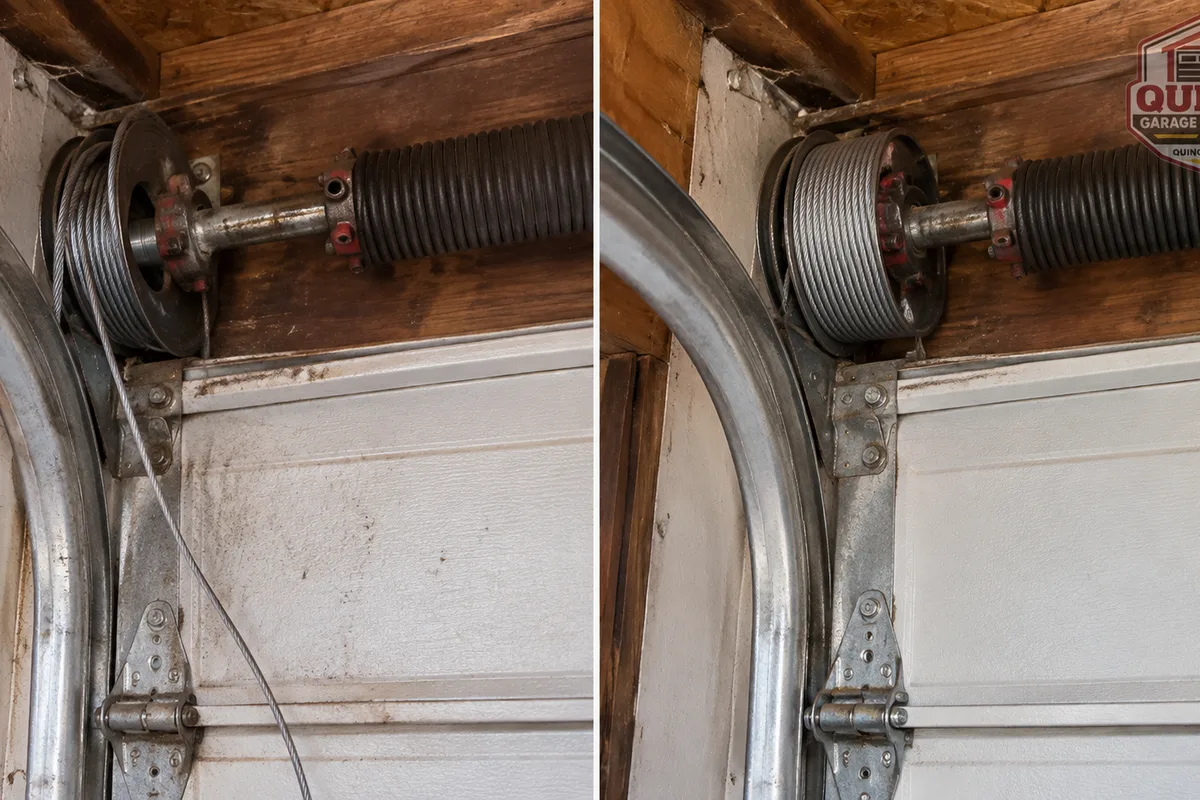
Garage door cable displaced from its drum beside the track with the opener disconnected and area clear for inspection
A loose cable or uneven door calls for inspection before another operating attempt.

Use another entrance if one is available, and keep the garage-door opening clear. If the door is partly open, do not stand or park beneath it. Photograph visible damage from a safe distance if that helps describe the problem, but do not touch hanging cables, exposed springs or displaced rollers.

If the door is fully closed and stable, leave it closed. If it is fully open, do not assume it will remain there. A door can weigh hundreds of pounds depending on its size and construction, and a failed counterbalance system changes how that weight is carried. Avoid improvised supports, clamps and attempts to lift the door with multiple people.

For an opener problem, check whether the garage has electrical power and whether the opener light or wall control responds. Do not bypass photo eyes or repeatedly change force settings to make the door close. Those devices and settings are part of the safety system, and mechanical resistance can look like an opener fault.

How Quincy Garage Door Repair Approaches an Urgent Repair

  1. Step01

    Describe the Failure

    Explain whether the door is open, closed or suspended between positions. Mention a loud snap, impact damage, loose cable, uneven movement, burning smell or unresponsive opener so the immediate safety concern is clear.

  2. Step02

    Secure and Inspect the System

    The technician evaluates the door's position before operating it. Inspection may include spring condition, cable routing, drum alignment, roller placement, track mounting, panel damage, opener attachment and photo-eye operation.

  3. Step03

    Identify the Failed Component

    Symptoms can overlap. A door that appears to have an opener problem may actually have a broken spring, while a crooked door may involve a cable, drum, track or roller fault. Diagnosis comes before adjustment.

  4. Step04

    Complete the Appropriate Repair

    The work depends on the damage found. A repair may involve replacing failed hardware, resetting cables, correcting track alignment or addressing an opener component while keeping compatible parts and door balance in mind.

  5. Step05

    Test Travel and Safety Functions

    After repair, the door is cycled to check smooth travel, balance and hardware movement. The opener's reversal response and photo-eye function are also checked when the opener is part of the system.

North Florida Conditions

Florida Weather Can Expose Weak Garage-Door Hardware

North Florida's heat, humidity and frequent rain can contribute to corrosion on exposed hardware and affect lubrication over time. Storm winds and wind-driven debris can also damage panels, tracks or the opening itself. After severe weather, a door with a bent panel, shifted track or unusual noise should be left idle until it is inspected.

A wet floor can conceal small parts or make the work area slippery, so keep water away from electrical controls and do not touch an opener that appears wet. If there is a burning odor, smoke or visible wiring damage, avoid using the opener and shut off the circuit only if the electrical panel can be reached safely.

Quincy Garage Door Repair can separate the immediate failure from maintenance items that are not preventing operation. That distinction matters during an urgent visit: the goal is to address the condition causing unsafe movement or lost access, then explain any other observed wear without confusing it with the emergency.

What Technicians Inspect During an Emergency Visit

Garage door cable off its drum beside the same assembly correctly reset, aligned and tensioned after repair
Cable routing and drum alignment affect whether the door rises evenly.
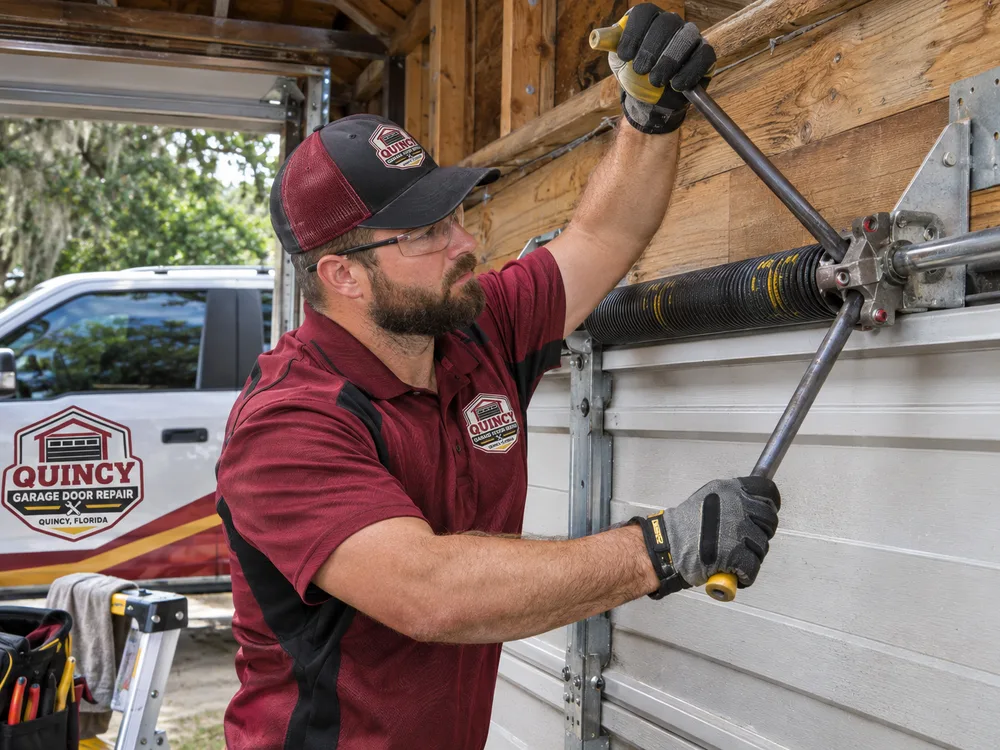
Technician using proper winding bars to service a torsion spring assembly while the garage door is secured closed
Spring work requires controlled tension and purpose-made tools.
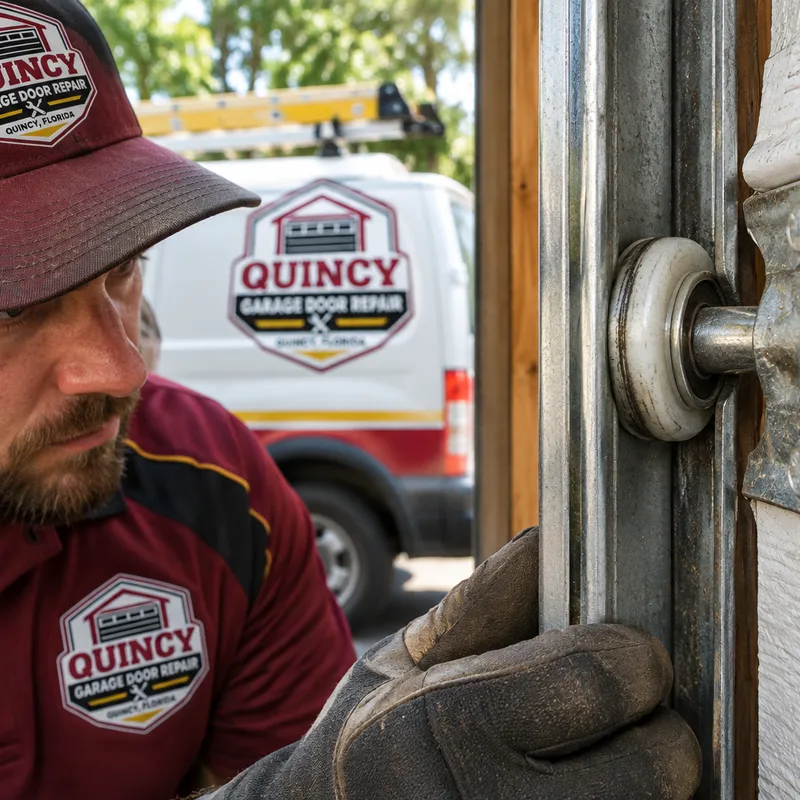
Garage door roller seated correctly in a straight vertical track after impact-related alignment work
Rollers, tracks and mounting points must work together without binding.
Urgent Repair Questions

Emergency Garage Door Repair Questions

Can I manually open a garage door with a broken spring?

A garage door with a broken spring should generally remain closed until it is repaired. Releasing the opener does not remove the door's weight, and lifting it can lead to an uncontrolled drop or additional cable damage. If a vehicle is trapped in a Quincy garage, describe the door's position and spring condition to Quincy Garage Door Repair rather than attempting to force it open.

What affects emergency garage door repair?

The work depends on the failure, door position, damage and required parts. Sensor alignment or minor hardware work may be relatively direct, while a crooked door with cable, drum and track damage requires controlled repositioning and testing.

Should both garage door springs be replaced if one breaks?

Paired springs are often evaluated together because they have operated through the same door cycles, but the correct recommendation depends on the installed system and each spring's condition. The technician should identify the spring type, dimensions and door balance before recommending replacement. Quincy Garage Door Repair can explain whether one or both springs are part of the repair scope.

Is a garage door that came off its track safe to use?

No, an off-track garage door should not be operated. A displaced roller, slack cable or bent track can allow the door to bind, twist or drop. Keep the opening clear and avoid trying to hammer the track straight, especially when the door is suspended between open and closed positions.

Why does my opener hum without lifting the door?

A humming opener may have a drive, motor, capacitor or trolley problem, but a jammed door or broken spring can produce a similar symptom. Stop repeated attempts because the motor may overheat while trying to move a door that has lost counterbalance. A mechanical and opener inspection is the safer approach.

Can a damaged garage door be secured if the full repair cannot be completed immediately?

Whether a door can be secured depends on its position and structural condition. A stable door may sometimes be placed in a closed position, but a severely bent, off-track or impact-damaged door may need to remain untouched until suitable parts or further work are available. The technician must inspect the opening before determining what is safe.

What information should I provide when requesting emergency garage door repair in Quincy, FL?

State whether the door is open, closed or crooked, and describe any visible spring gap, loose cable, bent track, impact or opener response. Include the approximate door size and whether a vehicle is trapped if known. These details help Quincy Garage Door Repair understand the immediate access and safety issue before arrival.

Get the Door Checked

Restore Safe Access to Your Garage

Call Quincy Garage Door Repair for a focused inspection and repair plan based on the actual failure.