The Motor Runs, but the Door Stays Still
The emergency release may be disengaged, the trolley may be damaged, or an internal drive gear may have failed. The door also needs to be checked for binding before the opener is run again.
Serving Quincy, Florida
Restore dependable door movement with careful diagnosis of the opener, controls, safety sensors, and connected hardware.
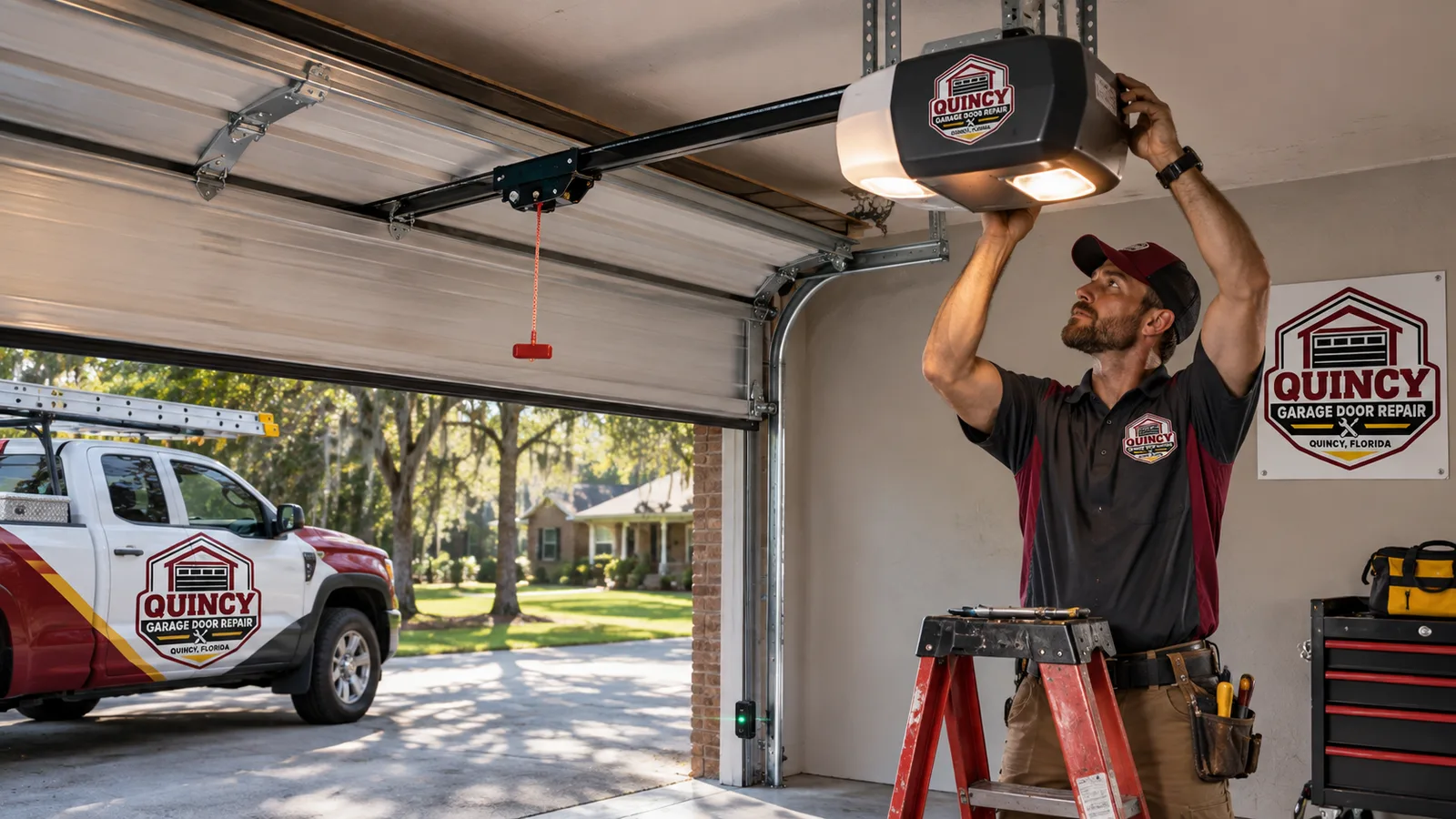
When a door will not respond, reverses unexpectedly, or stops partway through its travel, the cause is not always the motor. Garage door opener repair in Quincy, FL starts by separating an opener fault from a door balance, track, spring, roller, power, or control problem. That distinction matters because an opener should guide a properly balanced door, not strain against a heavy or binding one.
Quincy Garage Door Repair checks how the entire operating system behaves before recommending a repair. During each assessment, Quincy's garage door specialists evaluate the symptoms at the door, test the relevant controls and safety devices, and explain which component is causing the failure. The goal is a focused repair based on the condition of the system rather than replacing parts without a clear reason.
North Florida heat, humidity, thunderstorms, and airborne moisture can be hard on exposed wiring, photo-eye connections, remote batteries, and electronic controls. After a power interruption, an opener may also need its travel limits, force settings, or remote programming checked. These conditions do not identify the fault by themselves, but they are useful clues during diagnosis.
A garage door opener is a group of connected parts. The motor head supplies power, the rail and trolley transfer movement, and the control board responds to wall controls, remotes, keypads, and safety sensors. A fault in any one of these areas can make the opener appear completely dead or cause inconsistent operation.
Common service concerns include a motor that hums without moving the door, a trolley that no longer travels, a chain or belt that has lost proper tension, a wall control that does not respond, or a keypad that accepts no code. We also inspect blinking safety-sensor indicators, damaged low-voltage wire, worn gears, limit-setting errors, intermittent remotes, loose mounting hardware, and lights that behave abnormally.
The door itself remains part of the diagnosis. Bent track, dragging rollers, a disconnected emergency release, or incorrect spring balance can place excessive load on an opener. Springs and high-tension hardware should not be adjusted as a do-it-yourself test. If the door feels unusually heavy when disconnected, stop operating it and arrange an inspection.
The emergency release may be disengaged, the trolley may be damaged, or an internal drive gear may have failed. The door also needs to be checked for binding before the opener is run again.
Blocked or misaligned photo eyes are common causes. Travel limits, force settings, wiring faults, track resistance, and objects beneath the door also need to be ruled out.
Battery condition, antenna position, radio interference, remote programming, and the opener's receiver can affect range. Testing more than one control helps isolate the problem.
A click may point to a control or power issue, while humming can indicate a stalled motor or worn drive components. Repeated attempts can add strain to the mechanism.
A depleted battery, lost programming, damaged keypad, locked wall console, or receiver fault may be responsible. The keypad and opener must be tested together.
Incorrect travel limits, excess resistance, a weak drive component, or poor door balance can interrupt movement. The stopping point often provides a useful diagnostic clue.
We start with the wall control, remote, keypad, manual release, lights, and indicator codes. Details such as recent power loss or a sudden change in sound help narrow the test sequence.
The door's balance and movement are checked along with the rail, trolley, chain or belt, mounting points, tracks, and rollers. This identifies mechanical resistance that could overload the opener.
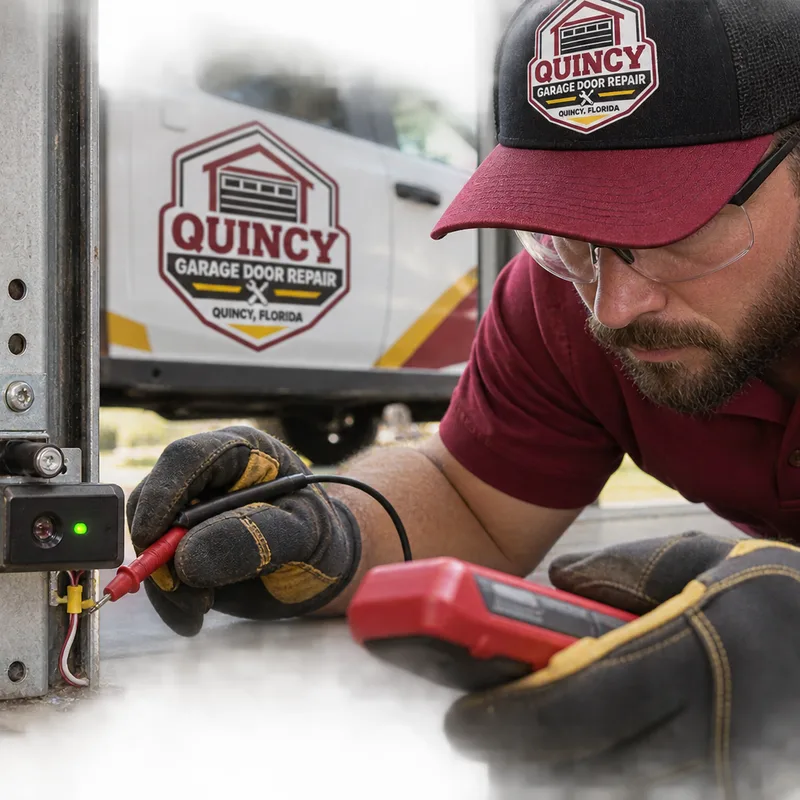
We examine power delivery, photo-eye alignment, low-voltage wiring, control response, and relevant opener settings. A closing door must respond correctly to its monitored safety sensors.
Once the fault is identified, Quincy Garage Door Repair explains the affected component and whether repair or opener replacement is the more sensible route. Work proceeds with an understood scope.
After the repair, the door is cycled to verify full travel, stopping points, control response, and safety reversal. Remotes or keypads are programmed when that work is part of the repair.
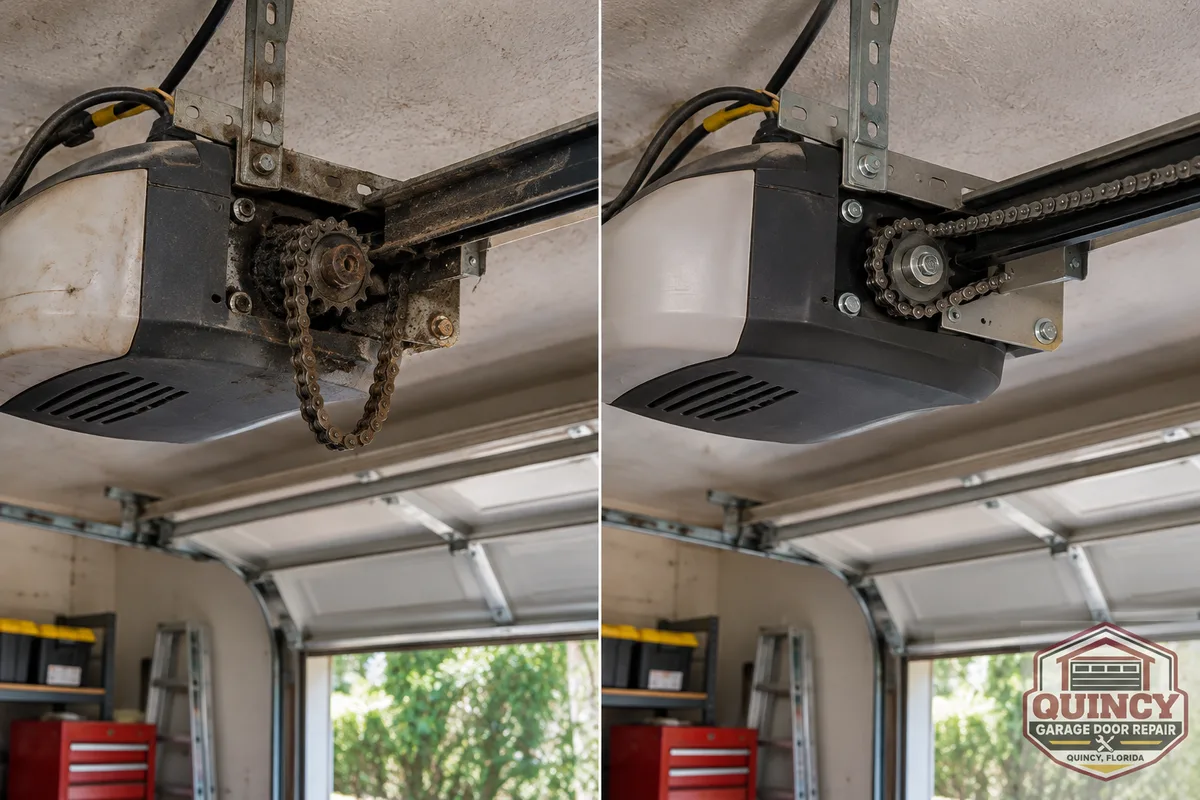
Repair is often reasonable when the opener is otherwise serviceable and the problem is confined to a sensor, remote, keypad, wall control, wiring connection, trolley, gear, or setting. Parts availability and the condition of the rail and motor also affect the recommendation.
Replacement may make more sense when major electronic and mechanical parts have both failed, the unit has recurring problems, repair parts are unavailable, or the opener cannot operate the door safely. A damaged door or poor spring balance should be corrected before either a repaired or new opener is expected to move it.
Quincy Garage Door Repair bases the recommendation on observable conditions. Customers should know what failed, what can be repaired, and what limitations would remain. If the door is stuck closed, disconnected from the trolley, or behaving unpredictably, leave high-tension components alone and avoid repeated opener cycles until the system can be assessed.
An opener that reverses, strains, or responds inconsistently can worsen without warning. Arrange a diagnosis before repeated operation adds load to the motor or door hardware.
CALL NOW: (850) 498-4024Yes, an opener with a running motor may be repairable because the fault can be in the trolley, drive gear, chain, belt, rail, or emergency-release connection. Quincy Garage Door Repair also checks whether the door binds or feels heavy, since a motor sound alone does not prove that the opener is the only problem.
The door may reverse because the photo eyes are blocked or misaligned, the wiring is damaged, the travel limit is incorrect, or the door meets resistance. Florida humidity and moisture can contribute to corrosion at exposed connections, so sensor indicators and wiring should be checked along with the track and opener settings.
Remote and keypad problems can often be corrected through battery replacement, reprogramming, lock-mode checks, or replacement of a failed control. The opener's antenna and receiver must also be tested because replacing a handheld remote will not fix a receiver or interference problem.
The work depends on the opener model, wiring access, door condition and whether the problem involves the motor, circuit board, rail or more than one component.
No, repeated operation should stop if the opener hums, strains, or cannot complete its travel. Continued cycling can damage drive parts, and a heavy or binding door may have a spring or track problem that should be handled with proper tools rather than adjusted by the homeowner.
A brief outage does not always erase settings, but a surge or control-board fault can affect remote programming, travel limits, or normal response. After thunderstorms common to North Florida, check the outlet and breaker without opening the motor housing; persistent faults need electrical and operational testing.
The fault is likely within the remote-control path rather than the main drive system, but testing is still needed. A weak battery, lost programming, damaged remote, antenna issue, interference, or receiver failure can produce the same symptom.
Tell Quincy Garage Door Repair what the opener is doing, when the problem began, and which controls still work. A focused inspection can identify the fault and establish a practical repair plan.