
Door Construction
Common choices include single-layer steel and insulated multi-layer doors. Panel weight, stiffness, finish and insulation value affect the hardware specification and overall specification.
Serving Quincy, Florida
Get a new garage door fitted to the opening, balanced for smooth travel, and set up with the safety hardware your home needs.
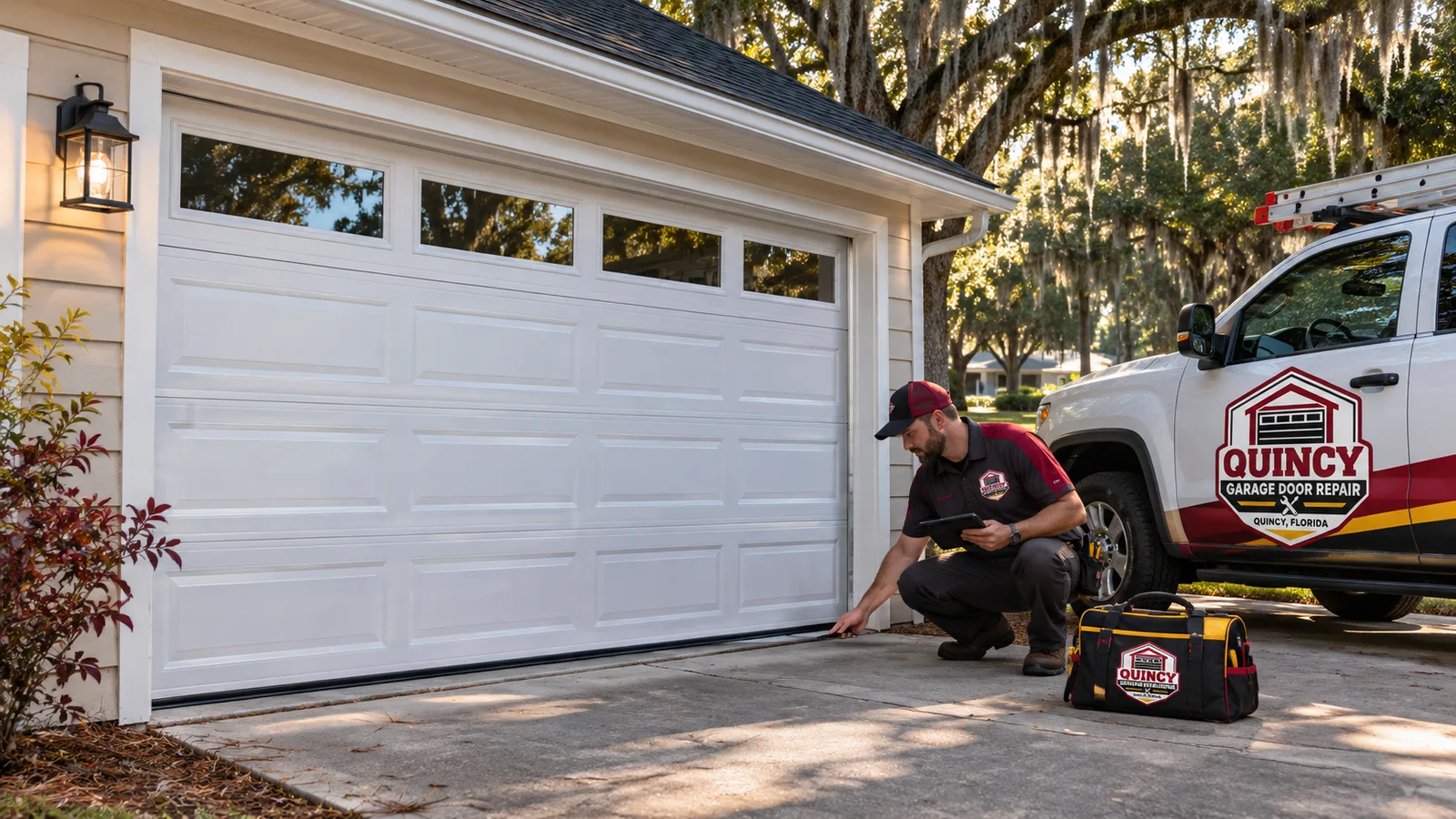
Garage door installation in Quincy begins with accurate measurements and a clear look at the opening, framing, headroom, side room, floor and ceiling clearance. Quincy Garage Door Repair uses those details to plan a door system that fits the structure rather than forcing standard parts into an unsuitable opening.
As a professional garage door company in Quincy, FL, Quincy Garage Door Repair handles the work as a complete installation: confirming the door configuration, setting the track, installing the spring and cable system, balancing the door, and checking its travel. If an automatic opener is part of the setup, the door must first move freely by hand. An opener should guide a properly balanced door, not compensate for excess weight, binding rollers or poor track alignment.
Quincy's warm, humid climate and frequent rain also affect material and hardware choices. Galvanized components, intact exterior finishes and a correctly seated bottom seal help limit moisture exposure. Wind exposure matters as well. The selected door and its supporting hardware need to match the opening and any applicable local requirements rather than relying on appearance alone.
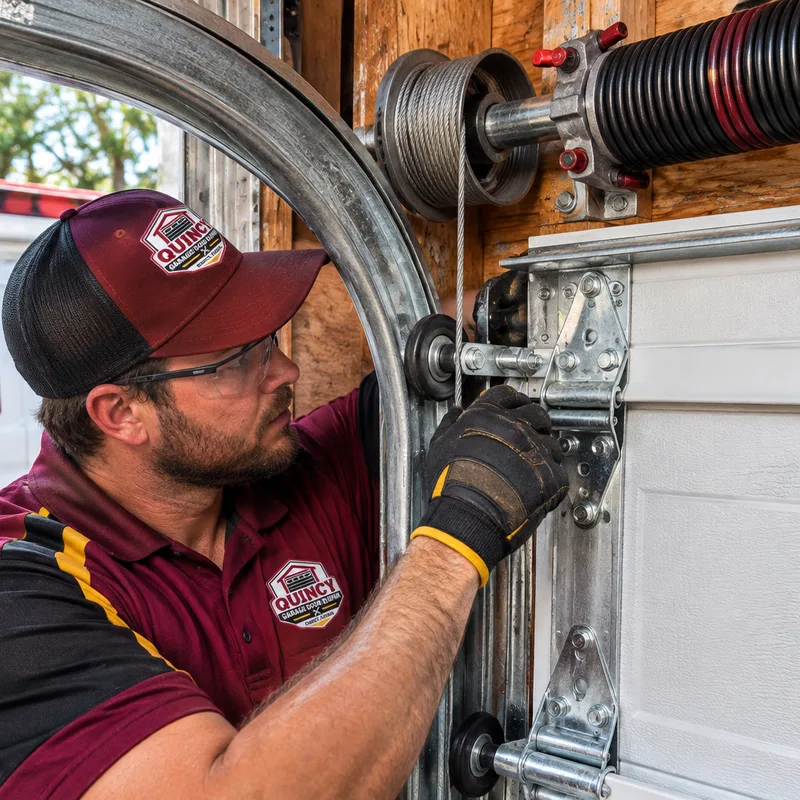
A new door changes how the garage looks, but the working system behind it determines how well it operates. Sectional doors use hinged panels that travel through vertical and horizontal tracks. The door may be counterbalanced by a torsion spring mounted over the opening or, in some configurations, extension springs alongside the horizontal tracks. Cable drums, lift cables, rollers, hinges and bearing plates must all suit the door's size and weight.
The opening itself is checked before installation. The jambs need sound fastening points, the header must support the spring assembly, and the floor should allow the bottom seal to make consistent contact. Low-headroom track may be considered when ceiling clearance is limited, while high-lift or other specialized track arrangements require enough structure and space to support them.
Insulation is another practical choice. An insulated steel door can reduce heat transfer through an attached garage and may provide a firmer panel construction than a basic single-layer door. The right choice depends on garage use, sun exposure, budget and whether rooms share walls or ceilings with the garage. Windows, panel design and exterior color can then be selected without losing sight of the operating requirements.
Common choices include single-layer steel and insulated multi-layer doors. Panel weight, stiffness, finish and insulation value affect the hardware specification and overall specification.
Standard-radius track works when headroom allows. Garages with lower ceilings, beams, storage racks or unusual framing may need a different track layout.
Springs are selected for the actual door weight and track configuration. Correct spring sizing allows controlled movement and keeps the door from feeling excessively heavy.
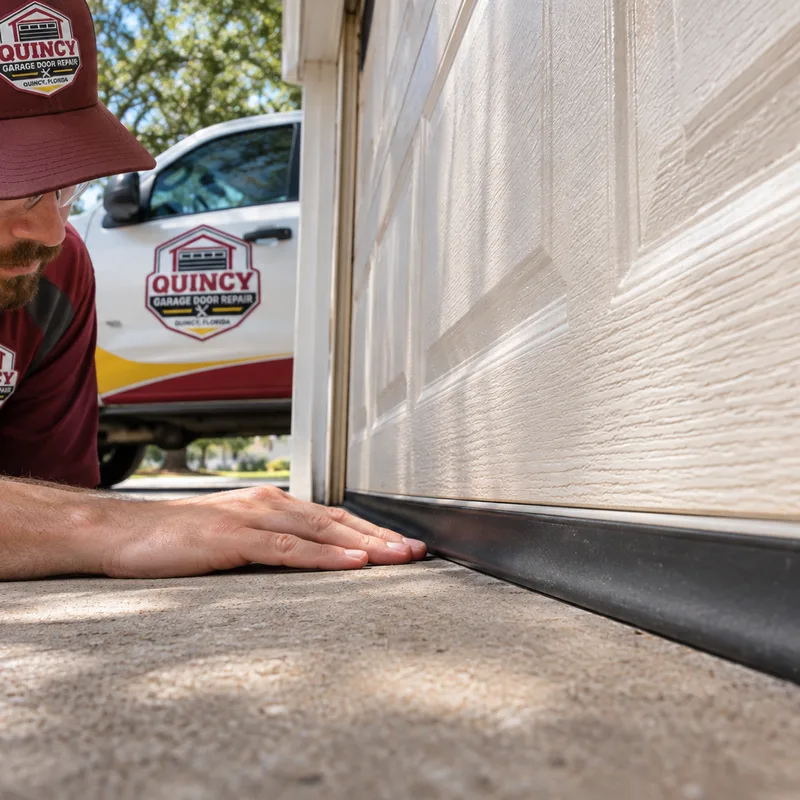
A bottom seal closes against the slab, while perimeter stop molding helps limit wind-driven rain, daylight and debris around the sides and top.
Opener compatibility depends on door height, weight, balance and available ceiling space. Photoelectric safety sensors also need correct placement and alignment.
Panel profiles, windows, decorative hardware and color can complement the home, but they are chosen after the opening and operating requirements are confirmed.
Quincy Garage Door Repair checks the opening width and height, side room, headroom, backroom, framing condition, floor level and ceiling obstructions. These measurements guide the door and track configuration.
Door construction, insulation, panel design, windows, track layout, spring type and opener compatibility are reviewed before installation. The scope should also identify any framing preparation that is needed.
When an existing door is present, spring tension must be controlled before panels and track are removed. The opening is then prepared so the new brackets and track have suitable fastening points.
Panels, hinges and rollers are assembled in sequence. Vertical and horizontal tracks are positioned, braced and aligned so the rollers can travel without rubbing or binding.
The spring, cable and drum components are installed for the selected system. Tension is adjusted so the disconnected door can move through its travel and remain controlled.
Final checks cover manual balance, track movement, fasteners, cable seating, seals and lock operation. If an opener is included, travel limits, force settings, wall controls and photoelectric sensors are tested.
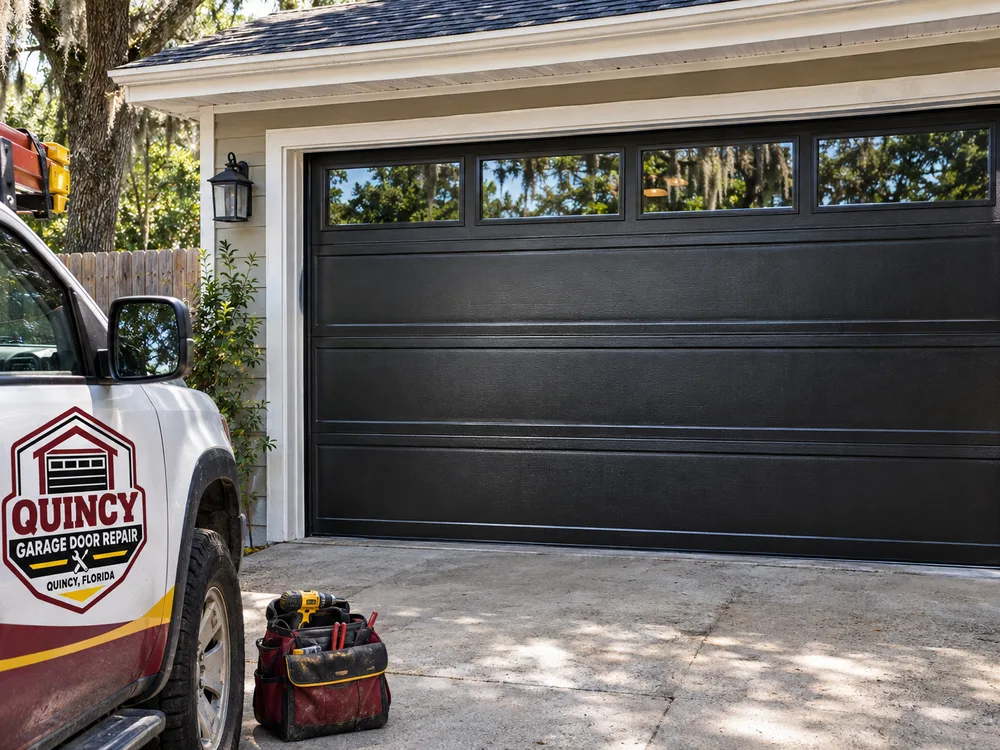
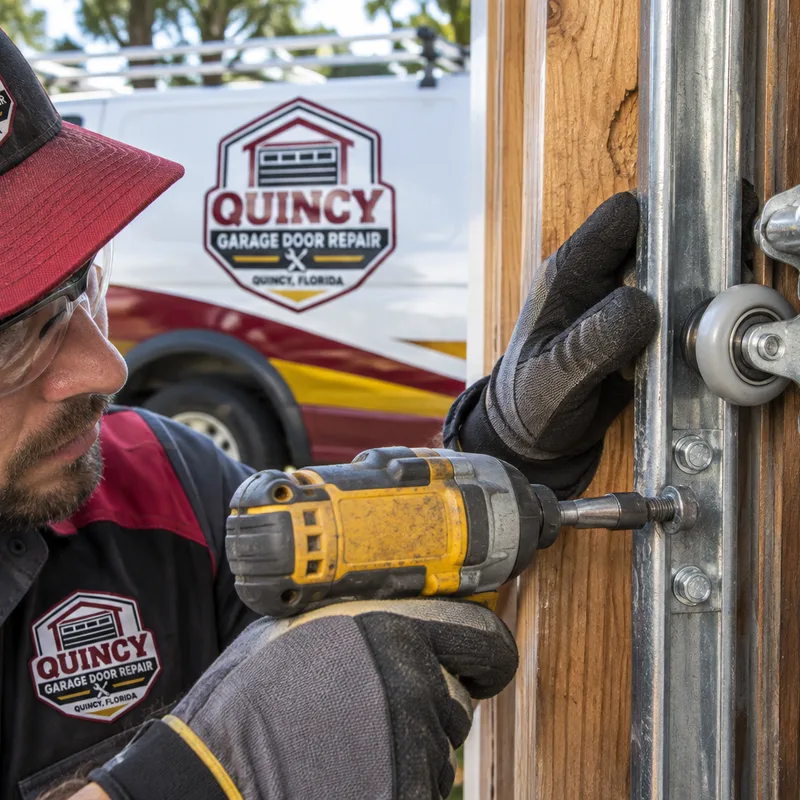
A useful installation scope identifies the door size, panel construction, insulation choice, track type, spring system, exterior finish and any window design. It should also state whether removal of an existing door, new perimeter seals, opener setup or framing preparation is included. Written details make it easier to compare options that may look similar but use different materials and hardware.
Ask how the proposed door fits the available headroom and how its spring system is matched to the door weight. If the garage has overhead storage, exposed beams, a low ceiling or a sloped floor, bring that up before the door is ordered. Measurements should account for those conditions early.
After installation, the door should stay controlled when operated manually, the rollers should remain seated in the tracks, and lift cables should wind evenly. The bottom seal should contact the floor without forcing the door out of alignment. With an opener connected, the safety sensors and automatic reversal functions should respond correctly. Quincy Garage Door Repair can inspect the opening, explain suitable configurations and define the work before setup begins.
Start with measurements and a clear installation scope so the selected door, track and spring system fit your garage.
CALL NOW: (850) 498-4024The work depends on the selected door, framing condition, track geometry, opener setup and hardware compatibility. The opening and selected configuration are reviewed before installation.
An existing opener may be reusable if it is compatible with the new door's height and weight and remains in suitable working condition. The new door must be balanced independently before the opener is connected. The opener's travel limits, force settings and photoelectric sensors should then be reset and tested for the completed installation.
Finished steel doors with corrosion-resistant hardware and intact weather seals are practical choices for Quincy's warm, humid and rainy conditions. Insulation may be useful for an attached garage or a space used as a workshop. The final selection should also account for sun exposure, opening size, wind requirements and available clearance.
Insulation is most useful when the garage is attached, conditioned, used for regular activities or exposed to strong afternoon sun. It can reduce heat transfer through the door, but it does not turn an unconditioned garage into a conditioned room. Panel construction, joint design and perimeter sealing also affect how the installed door performs.
The key measurements are finished opening width and height, side room, headroom and backroom. The installer also checks jamb and header framing, floor level, ceiling obstructions and the location of an existing opener. A small measuring error can affect track fit, seal contact and whether the ordered door can operate correctly.
A new door may be possible with low-headroom track, but suitability depends on the exact clearance and the position of beams, lights, storage and opener equipment. Specialized track changes how the top section moves through the opening. Quincy Garage Door Repair can measure the space and determine which layout fits.
The required door specification depends on the property, opening and applicable local code requirements. A wind-rated system may use reinforced panels, heavier tracks and additional bracing, and every listed component must be installed as intended. The appropriate rating should be confirmed before the door is ordered.
Call Quincy Garage Door Repair for a practical assessment of fit, hardware and installation scope.